


0

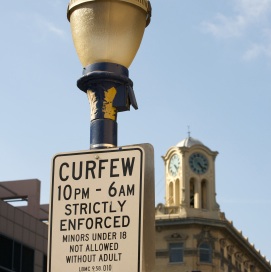
Parents of teenagers often spend countless weekend nights waiting up, dozing on the couch, or sleeping lightly until they hear the slam of the front door, signaling that their teen is finally home.
When the time comes to establish a curfew, there are several factors to consider when choosing a time that is both appropriate for your teen but still allows them to develop independence.
First, check your local and state regulations. Does your town have a nighttime curfew for teens? Do the local malls require teens to be accompanied by an adult after a certain time? Additionally, if your teen is driving, what restrictions apply to his or her license? Be cautious to make sure the curfew you establish meets the legal guidelines.
Next, you should consider the friends with whom your teen spends his or her time. If you are familiar and comfortable with your child’s friends, it can be easier to decide on a time that is both fair and reasonable to them. However, if your teen is spending most of their time with friends you have not met, you may want to choose an earlier curfew to prevent your teen from getting into trouble.
You also need to consider where your teen is spending their time. Are they at a part-time job? Are they frequently going to movies or school events? If your teen is spending his or her evenings participating in activities with a defined ending time, then you can feel confident setting a curfew that is approximately an hour after the end of the event. This allows your teen to not rush home immediately following the event; being in a hurry can often be the cause of accidents or speeding tickets. If your teen prefers activities that are more open-ended, it is important to establish a curfew that offers flexibility while still considering his or her safety.
Sometimes when it comes to setting a curfew it can be better to not have one at all. This does not mean allowing your teen to run amok until all hours of the night, but rather establishing your home as an inviting and safe place for your teen and their friends to spend their evenings. If possible, meet with the parents of your child’s friends and work out an arrangement that allows your teenagers to spend weekend evenings at the homes of a variety of friends.
When it comes to choosing a curfew, the most important things to consider are safety and trust. By establishing a curfew that is reasonable, appropriate, and flexible, your teen will not only learn to show you respect, but also that he or she can earn your respect and trust.

What else can I help you with?
What is the ideal heat setting for cooking scrambled eggs?
The ideal heat setting for cooking scrambled eggs is low to medium-low heat.
What is the ideal temperature setting for a hot water heater?
The ideal temperature setting for a hot water heater is typically around 120 degrees Fahrenheit to balance safety and efficiency.
What is the ideal temperature setting for a good fridge temp to ensure food safety and freshness?
The ideal temperature setting for a fridge is 37-40 degrees Fahrenheit to keep food safe and fresh.
What is the ideal pressure setting for brewing a 15 bar or 20 bar espresso?
The ideal pressure setting for brewing a 15 bar or 20 bar espresso is typically around 9 bars.
What is the word family for curfew?
curfew
What is curfew in Amsterdam?
There is no curfew anywhere in The Netherlands.
What is the curfew for Sylvania Ohio?
no curfew(not that i know of)
What part of speech is curfew?
"Curfew" is a noun.
What age do you not have curfew in El Paso Texas?
When you are 16, you have a curfew. When you turn 17, you no longer have a curfew.
What are curfew times for minors in Tustin and Irvine?
Curfew
What time is curfew for oshawa Ontario?
there is no public curfew
What is the ideal hair length setting on an 8 hair clipper for achieving a precise and uniform haircut?
The ideal hair length setting on an 8 hair clipper for achieving a precise and uniform haircut is typically around 1 inch.
