0
Missionaries
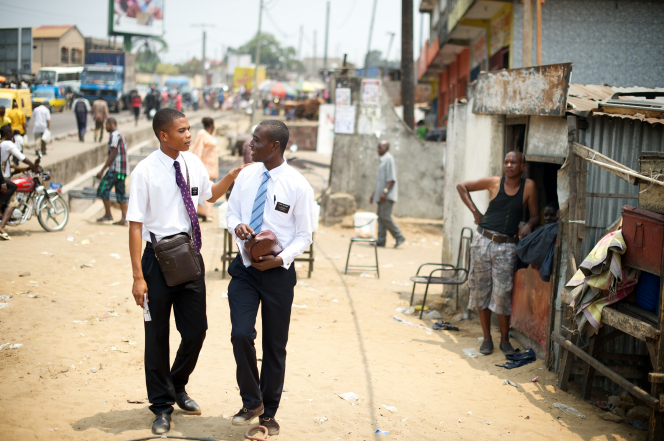
Missionaries are people who put service over self and often travel to remote parts of the globe. Typically, they assist natives of the area with basic necessities and medical care, but their primary purpose is the promotion of their religious beliefs.
646 Questions
What did the missionaries do to help Indians?

They really didn't in the long run. They robbed Native Americans of their real Indian names, forcing them to take Christian names, and also robbed them of their innate spirituality and religious heritages.
When did the apostle Paul's missionary journeys begin?
Paul's First Missionary Journey In Acts 13:2,3, Paul and Barnabas, gathered with other disciples at Antioch of Syria, were called by God to their first missionary journey: "Separate me Barnabas and Saul (Paul) for the work whereunto I have called them." The disciples fasted and prayed before sending them forth on their journey, whereby they took a ship to Cyprus. According to Professor E.E. Ellis, PhD of Bethel Seminary, the first journey started in AD 46, ending with their return to report to the church at Syrian Antioch in AD 49, a duration of about three years. The ministry took place solely on Cyprus and what is modern Asia Minor in the southern provinces of Pamphylia, Pisidia and Lycaonia. Paul was stoned and left for dead at Lystra of Lycaonia, but the disciples prayed and he rose up, continuing his ministry in the region before returning to the home church. In terms of distance the total journey, as a round trip, would have been between 900 to 1000 miles. While the Acts account is widely accepted, some believe that an earlier journey was Paul's first missionary journey. The account is found in Galatians.
What did the missionaries really do?
Early works: The Jesuits were founded just before the Counter-Reformation (or at least before the date those historians with a classical view of the counter reformation hold to be the beginning of the Counter-Reformation), a movement whose purpose was to reform the Catholic Church from within and to counter the Protestant Reformers, whose teachings were spreading throughout Catholic Europe. As part of their service to the Roman Church, the Jesuits encouraged people to continue their obedience to scripture as interpreted by Catholic doctrine. Ignatius is known to have written: "...: I will believe that the white that I see is black if the hierarchical Church so defines it." Ignatius and the early Jesuits did recognize, though, that the hierarchical Church was in dire need of reform, and some of their greatest struggles were against corruption, venality, and spiritual lassitude within the Roman Catholic Church. Ignatius's insistence on an extremely high level of academic preparation for ministry, for instance, was a deliberate response to the relatively poor education of much of the clergy of his time, and the Jesuit vow against "ambitioning prelacies" was a deliberate effort to prevent greed for money or power invading Jesuit circles. As a result, in spite of their loyalty, Ignatius and his successors often tangled with the pope and the Roman Curia. Over the 450 years since its founding, the Society has both been called the papal "elite troops" and been forced into suppression. St. Ignatius and the Jesuits who followed him believed that the reform of the Church had to begin with the conversion of an individual's heart. One of the main tools the Jesuits have used to bring about this conversion has been the Ignatian retreat, called the Spiritual Exercises. During a four-week period of silence, individuals undergo a series of directed meditations on the life of Christ. During this period, they meet regularly with a spiritual director, who helps them understand whatever call or message God has offered in their meditations. The retreat follows a Purgative-Illuminative-Unitive pattern in the tradition of the mysticism of John Cassian and the Desert Fathers. Ignatius' innovation was to make this style of contemplative mysticism available to all people in active life, and to use it as a means of rebuilding the spiritual life of the Church. The Exercises became both the basis for the training of Jesuits themselves and one of the essential ministries of the order: giving the exercises to others in what became known as retreats. The Jesuits' contributions to the late Renaissance were significant in their roles both as a missionary order and as the first religious order to operate colleges and universities as a principal and distinct ministry. By the time of Ignatius' death in 1556, the Jesuits were already operating a network of 74 colleges on three continents. A precursor to liberal education, the Jesuit plan of studies incorporated the Classical teachings of Renaissance humanism into the Scholastic structure of Catholic thought. In addition to teaching faith, the Ratio Studiorum emphasized the study of Latin, Greek, classical literature, poetry, and philosophy as well as non-European languages, sciences and the arts. Furthermore, Jesuit schools encouraged the study of vernacular literature and rhetoric, and thereby became important centers for the training of lawyers and public officials. The Jesuit schools played an important part in winning back to Catholicism a number of European countries which had for a time been predominantly Protestant, notably Poland and Lithuania. Today, Jesuit colleges and universities are located in over one hundred nations around the world. Under the notion that God can be encountered through created things and especially art, they encouraged the use of ceremony and decoration in Catholic ritual and devotion. Perhaps as a result of this appreciation for art, coupled with their spiritual practice of "finding God in all things", many early Jesuits distinguished themselves in the visual and performing arts as well as in music. The Jesuits were able to obtain significant influence in the Early Modern Period because Jesuit priests often acted as confessors to the Kings of the time. They were an important force in the Counter-Reformation and in the Catholic missions, in part because their relatively loose structure (without the requirements of living in community, saying the divine office together, etc.) allowed them to be flexible to meet the needs of the people at the time.
What do you do to become a deacon in a Baptist church?
Well, I don't believe that strongly in the ties of one denomination over another, so it might not be too accurate. But, for me, I would say that if you say you are baptist and start going to a baptist church you might as well be baptist. I prefer to stay categorized as non-denominational myself.
Allie Yun's Answer: If you are an adult, speak with somepeople at your church for details about converting. It is your life, and your decision which religion you would like to follow. If you are a teen or child, you can talk to your parents. If your parents still folloiw the Catholic ways OR they dont attend church, I'm not sure what you would do. I am in this situation right now. My parents dont attend church but we are "classified" as Catholics. I have gone to Faith Baptist Church with my friends many times and every time I feel that it is where I belong. I am building up courage to talk to my parents about this "issue" and hope you can build up that courage to. Christ will give you the strength and He will be the light that guides your way. If you really believe you need to convert, I am sure you will find a way.What was the purpose of Paul's missionary journeys?
Paul traveled to make new converts and to check up on earlier converts and members of the Church. He wanted to assure that they remained true to the Gospel. Sometimes he traveled to settle disputes. For example, he traveled to Jerusalem to meet with the other apostles to discuss some of the rules they were trying to enforce on the gentiles.
What are the rules for Mormon missionaries?
Excommunication in the Church of Jesus Christ of Latter-day Saints (commonly called the "Mormon" church) is quite rare, although it was more common in the earliest days of the Church. The process and rules regarding excommunication are rather specific. The process works like this:
When a Church member commits a serious sin, it is their responsibility to visit with their local congregation leader (a Bishop) to receive counsel and support in repenting of the wrong. The Bishop will discuss the act of repentance with the individual and suggest a course of action. The vast majority of issues discussed with a Bishop require no formal disciplinary action. For more serious sins, the Bishop may choose to quietly place the individual on probation, meaning that they should not partake of the Sacrament (communion) or attend special Temple worship services (different than regular Sunday services) for a period of time until the issue is resolved. For the most serious sins, a "Church Court" is convened, comprised of local Church leaders. The Church Court will meet together and with the individual to decide whether no action, disfellowshipment, or excommunication should occur. Disfellowshipment is a step slightly higher than probation and lasts longer. It means that the individual, while still a member of the Church, may not hold a position in the Church, lead congregations or classes in prayer, or give sermons during worship services. If the individual is male, their rights to perform the ordinances of the Priesthood are put on hold.
Excommunication is the most serious form of Church discipline and must be decided by a Church Court. Excommunication is only possible in cases of murder, adultery, plural marriage (polygamy), incest, having apostatized and become openly antagonistic against the Church, abortion, having a transsexual operation, attempted murder, rape, forcible sexual abuse, intentionally inflicting serious physical injuries on others, fornication, homosexual relationships, child abuse (sexual or physical), spouse abuse, deliberate abandonment of family responsibilities, robbery, burglary, embezzlement, theft, sale of illegal drugs, fraud, or perjury. Those who hold leadership positions in the Church are held to a higher standard than recent converts or younger members. Teens and young adults are very rarely excommunicated for these behaviors, they are usually put on probation.
Excommunication, just like disfellowshipment and probation, is meant to be temporary. While excommunicated members are no longer members of the Church, they are encouraged to continue attending worship services and meet with the Bishop regularly to track their progress. Excommunicated members may be re-baptized and regain full fellowship in the Church if they choose to do so. The process would be the same as if they were a convert to the Church.
You can learn more about the rules and reasons of excommunication within the Church from the "Related Links" below.
What is the story of St Alphonsus Ligouri?
Saint Alphonsus Liguori (September 27, 1696 -- August 1, 1787) was a Roman Catholic Bishop, spiritual writer, Theologian, and founder of the Congregation of the Most Holy Redeemer, known as the "Redemptorists," an influential religious order. He was canonized in 1839 by Pope Gregory XVI and is a Doctor of the Church.
(taken fro Wikipedia) for more info on this subject go to the link bellow
Who are some famous Spanish missionaries in the US?
Eusebio Kino was a Jesuit missionary in what is now the Southwest of the US.
Junípero Serra was a Majorcan Franciscan friar who worked in California.
Ida Scudder died on May 24, 1960 at her bungalow in Kodaikanal, India. She woke up that morning feeling unusually dizzy. A nurse offered her a cup of coffee, saying it would "clear her head". She politely refused. Five minutes later, Ida Sophia Scudder was dead.
Let us use | as the bank of the river, ...... as the wate, and ____ as the other side cccmmm|boat ........|_____ Two cannibals go across and one comes back cc_mmm|boat ..........|c_____ Two cannibals go across and one comes back c__mmm|boat ..........|cc____ Two missionaries go across and a missionary and a cannibal come back cc_mm_|boat............|c__m__ Two missionaries go across and a cannibal comes back ccc___|boat............|___mmm Two cannibals go across and one comes back cc____|boat...........|c__mmm Two cannibals go across ______|..........boat|cccmmm
What is the journey morman boys go on called?
College-age members of the Church of Jesus Christ of Latter-day Saints (commonly called the "Mormon" church) often spend 18-24 months on a "mission" - serving as travelling ministers for the church. Missions are open to both young men and young women, although missionary service is more common among men than women. This is because Mormon boys are generally ordained to the priesthood at age 12 and missionary work is seen as a priesthood duty - an obligation for those who have been ordained. Girls do not view mission work as a duty or an obligation but instead something they can choose to do if they feel a calling.Click here to see a photo of sister (female) missionaries
Who was named after San Buenaventura Mission?
Mission San Buenaventura was named after St.Bonaventure
How many years after Paul's first journey did he write Galatians?
Immediately after his conversion to Christianity, Paul went straight to Arabia (Petrea) and afterwards went to Damascus, but escaped the city when the governor under Aretas, king of the Nabateans from 9 BCE to 40 CE, had a garrison deployed to arrest him because of his Christian activities (2 Corinthians 11:32-33). He then spent time in Syria and Cilicia, and then jouneyed to Jerusalem (Galations 1:16 - 2:1). He must have spent 3 years in Damascus, 14 years in Syria and Cilicia, and indeterminate periods in the other centres. Therefore, his conversion would have been at least 18 to 20 years before he wrote Galations.
The three missionary journeys are a convenient classification developed by students of Acts, but in his undisputed letters Paul gives us no information about the first missionary journey. A difficulty in harmonising the epistle with Acts of the Apostles is that Paul speaks of his journey to the regions of Syria and Cilicia quite early in his mission, whereas Acts speaks of Paul journeying to Syria and Cilicia at the start of the second missionary journey. It is only with difficulty that the two accounts can be aligned. If in fact there was a "first missionary journey", this could have been completed any time between ten and more than twenty years before Paul wrote Galatians.
Was Bishop Iona Locke ever married?
No. Bishop Iona Locke has never been married.
She was engaged to Bishop Earl Wortham of Baltimore Maryland back in the 1980's.
When and why did Japan close its country to Westerners and foreign missionaries?
Foreigners, Occidentals (Westerners) in particular, during the experiences of Japanese Officials, seemed to have a habit of being dishonest. When these foreigners, for example might say, "...we only want to establish a trading base here...", the Japanese would later learn that a new city was being planned instead.
When some foreigners might say, "...we only want to teach new religions here...", the Japanese would later learn that citizens were being "forced" to act certain ways or do certain things. Religion is NOT supposed to FORCE anyone to do anything; let alone from some "foreigner"; and especially not in Japan.
Consequently in 1600 AD, Ieyasu Tokugawa (1543-1616), the first Shogun of Japan, established the "Shogunate Era" which "Isolated Japan" and lasted from 1600 until 1868, at which time Japan began to industrialize to meet the challenges of the 20th Century.
Tokugawa also ordered the seclusion of Japan (Sakoku) to prevent the entry of christianity.
Is Birmingham and Nottingham in the same lds mission?
Yes. The England Birmingham Mission also covers Nottingham.
A map of the current mission boundaries can be found at the "Related Links" below. The Birmingham mission is shaded in yellow.
What steps did St. Paul have to take before he became a missionary?
The answer lies in Galatians 1:15: "But when it pleased God, who separated me from my mother's womb, and called me by his grace, To reveal his Son in me, that I might preach him among the heathen; immediately I conferred not with flesh and blood: Neither went I up to Jerusalem to them which were apostles before me; but I went into Arabia ..." Arabia was then known as the area to the immediate south-east of the Dead Sea, with its capital Petrea.
It seems that immediately after Paul' conversion, however this did occur, he spoke to no one but went to the city of Petrea. What happened here is not stated. He could have meditated before commencing his arduous mission, or simply asked King Aretas for permission to preach to the gentiles in Syria. That he then returned to Damascus gives some credence to the second possibility.
Who were the companions of St. Ignatius of Loyola?
James Lainez, Alonso Salmerón, Nicholas Bobadilla, Simón Rodriguez, Blessed Peter Faber, and Saint Francis Xavier